What If Nazi Germany Won in Ukraine


«Those who are now destroying the cemeteries of the Soviet soldiers will still pay for doing so. Nature will take revenge on them and their children although they may not believe this now. No one can cancel the law of historical karma. This law always catches up to the grave robbers.»

-Oles Buzina

Notes on Context, Editing, and Translation

This article was originally called “Stories from Oles Buzina: Under the Greatcoat of Victory” from the popular Ukrainian author’s “Stories from Oles Buzina” series. It was published in May 2009. As mentioned with all the other Buzina translations, their author was assassinated in 2015 likely for his political views, including those against the 2014 regime change in Ukraine. You can find the other Buzina translations below by using the appropriate “Buzina” hashtag.
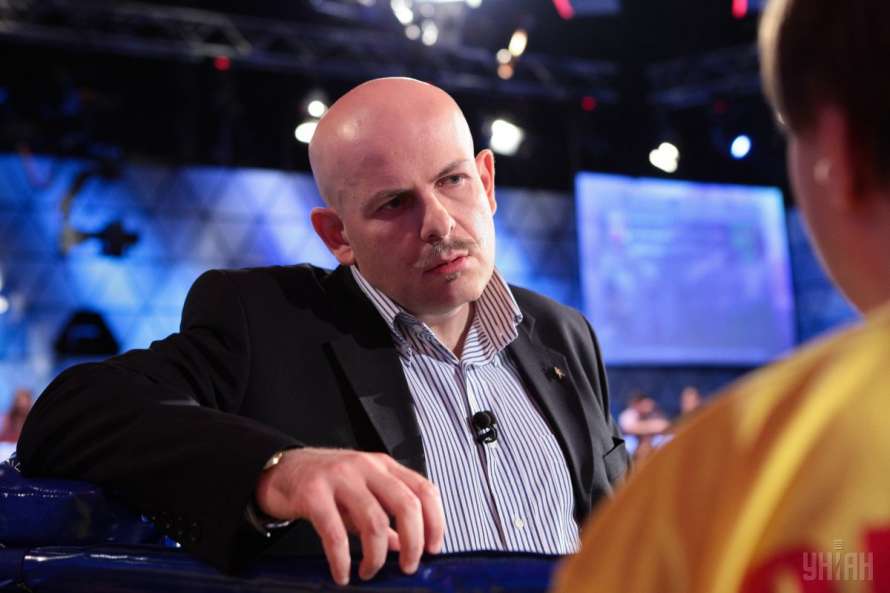
Ukrainian journalist Oles Buzina. Source: Lenta.ua.

Even though the original was written in 2009, it remains ever more relevant. Echoes of World War II permeate the ongoing conflict in Ukraine that began in 2014 as the war in Donbass. For example, Buzina disparages the 21st-century supporters of the Third Reich collaborators in 1940s Ukraine. These present-day supporters have been receiving international media attention since 2022. Parallels between then and now are also evident when it comes to Nazi Germany’s plans for Crimea as a resort exclusively for Germans and what some alleged to be NATO’s failed plans to turn Crimea into a naval base in 2014.

The article is written in Buzina’s signature style combining his caustic sense of humor with historical deep dives. This style is particularly evident in his description of the Munich Agreement (1938) highlighting it as a precedent that subsequently forced the Soviet Union into a neutrality agreement, the Molotov-Ribbentrop Pact (1939), with Nazi Germany. However, it is important to note that Buzina then refers to the Soviet Union and Nazi Germany as “allies”—for a short time. This classification is inaccurate because a non-aggression, or a neutrality, agreement, is not a military alliance. Furthermore, prior to Molotov-Ribbentrop came other similar agreements with Nazi Germany, including the German-Polish declaration of non-aggression in 1934. Thus, the Soviet-German neutrality agreement was not unique.

Note that when the author refers to the “war,” he means the Great Patriotic War, the accepted term for the period between 1941 and 1945 in World War II historically used by the USSR and today—by Russia and parts of the former Soviet Union. Buzina also repeatedly mentions the period of 1941-1944: these are the dates for Nazi German occupation of the Ukrainian territory called Reichskommissariat Ukraine prior to the Soviet liberation. “May 9” refers to the official Victory Day in Russia and the post-Soviet states.

Editorial clarifications are labeled “Ed.” in parentheses.

The translation appears as is. Minor edits include using a person’s first name in the first instance or other types of minor clarifications. The names and toponyms are transliterated from the Russian original.

Continue reading
An Incredible Survival Story of an American Prisoner of War During World War II (That You’ve Never Heard Of)

I am bringing you my newest deep-dive video just in time for the weekend. This is an INSANE survival story of Robert Preston Taylor, an American chaplain, and prisoner of war, during World War II.

Enjoy!

One-Time
Monthly
Yearly

Supporting my work allows me to bring you content on a regular basis.

Make a monthly donation

Make a yearly donation

Choose an amount

¤5.00
¤10.00
¤50.00
¤5.00
¤15.00
¤100.00
¤5.00
¤15.00
¤100.00

Or enter a custom amount

¤

Your contribution is appreciated.

Your contribution is appreciated.

Your contribution is appreciated.

DonateDonate monthlyDonate yearly

Nazi German Weapons as Trophies at the Service of the Red Army in World War II

Editor’s and Translator’s Notes:

There has been much discussion about the trophies used by each side in the current conflict in Ukraine. For this reason, it is worthwhile to return to World War II and examine the captured weapons used by the Red Army to its advantage. The following article, originally entitled “Red Army’s Trophies: What Did Our Fighters Take from the Germans?” was translated as is. Exceptions include 1) using “Soviet” or “Red Army” instead of “our,” and “World War II” instead of the “Great Patriotic War” for an English-speaking audience; 2) minor clarifications on weapons’ names; 4) a clarification about the incident with Vasily Vatanam; 4) two inset stories about Vasily Vataman and Mikhail Devyatayev, respectively, written specifically for this translation by me or translated from another source.

Nazi German Weapons as Trophies at the Service of the Red Army in World War II

By Boris Semionov

We have already written about trophies in the global history of wars and conflicts and that the trophy business is an important part of any war.

Now let us consider World War II, in which both warring parties gladly used captured enemy weapons or equipment. Today we will discuss the preferred types of trophy small-caliber firearms and other weapons manufactured by the enemy that also served the Red Army in the liberation of the Soviet Union and Europe from the Nazi invaders.

Small-Caliber Firearms

Undoubtedly, the most important aspect of World War II for the Soviet Union was the large-scale land battles along the entire front from the Baltic to the Black Sea. And, of course, they would not have been possible without the small-caliber firearms. During the war, such firearms were actively developed and improved as dozens of new models emerged. Yet the warring parties approached the question of arming and supplying their infantrymen in completely different ways. By the way, we should note that the Red Army was better armed in almost all categories.

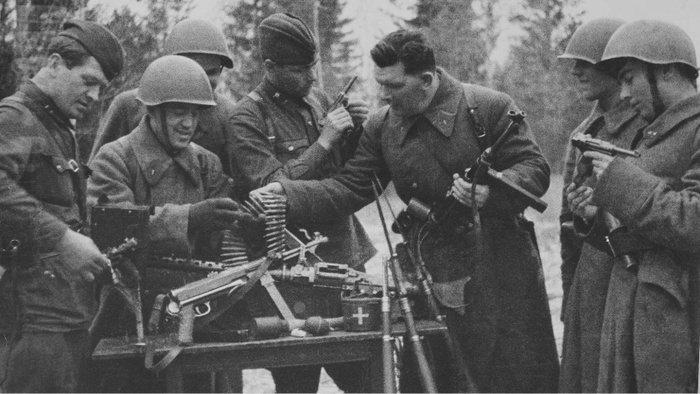
Red Army soldiers with captured firearms.

Nevertheless, in the massive battles of the Second World War, the Red Army collected a multitude of trophy firearms.

Continue reading

The Walking Dead: Russia’s Immortal Regiment as Ancestor Veneration

“You are but millions. We are hordes and hordes and hordes.” (“Scythians,” Alexander Blok, 1918)

On May 9, 2015, Ban Ki-moon, the United Nations Secretary-General, was on an official visit to Moscow in order to commemorate the 70th anniversary of the end of the Second World War in Europe. Upon seeing countless people marching in the streets, he assumed that what he was witnessing was an anti-Putin protest. This kind of ‘misunderstanding’ was not a surprise. After all, European and North American mainstream media is fond of exaggerating anti-government protests—by a handful of affluent pro-Western ideological Liberals—that are limited to large urban centers. Yet that day, foreign journalists were forced to cover something unprecedented, though underestimating the numbers: half a million Muscovites marched through the city carrying mounted photographs of their family members, who participated in the Great Patriotic War (1941-1945).

But then I saw that, on the contrary, the marchers hailed your government. I saw that they did it with pride, I saw it in their faces. They waved to us as the UN delegation passed by, which was very pleasant. And so I really think you deserve all this love of the people.

Continue reading

Stories from Oles Buzina: SS Galicia Division against Ukraine

Foreword to the Translation

With the onset of the Ukrainian crisis, I realized that I often looked forward to the work of certain journalists, who were both eloquent and informative. Oles Buzina was one of them. In addition to reading his columns, I, like millions of other Russians, watched his frequent appearances on political talk shows. I often found myself in disagreement, but had to admit that his points were well-argued and factually justified—a true sign of a charismatic erudite.

Thus, the news of his brazen murder on April 16 of this year, in broad daylight and outside his home, was particularly distressing. Later, I found out that Oles—a well-known author and historian, in addition to his journalistic career—had been receiving threats for quite some time. Yet he consistently turned down offers to relocate to Russia. Like a true patriot of a country in peril, he continued to love Ukraine. But Ukraine—today’s Ukraine—did not return that sentiment.

Continue reading

Beyond Left and Right, Beyond Red and White: Framing the Liberation War in Donbass

“There are no separate Russia or Ukraine, but one Holy Rus” – Elder Iona of Odessa

The year 2014 saw an unprecedented surge of patriotism in contemporary Russia, which resulted in popularizing the notion of the Russian World. One reason for the increased patriotic sentiment was Crimea’s return to the home port after the overwhelmingly positive vote by its majority-Russian residents in a referendum one year ago. The onset of the liberation war in Donbass from the West-backed Kiev regime was the other. This war truly delineated the stakes for the existence of the Russian World. The latter is not an ethnic, but a civilizational concept that encompasses shared culture, history, and language in the Eurasian space within a traditionalist framework. To a certain extent and despite the obvious ideological differences, the Russian Empire and the USSR embodied the same geopolitical entity. A particularly noteworthy aspect of the ongoing crisis in Donbass is the symbolism—religious and historic—that surpasses the commonly used, but outdated Left-Right political spectrum. In the Russian context, this also means overcoming the Red-White divide of the Communist Revolution. That this war pushed Russians to examine their country’s raison d’être is somewhat remarkable: for two decades its citizens did not have an official ideology, prohibited by the Constitution that is based on Western models. The emergence of a new way of thinking in Russia will become clearer once we refer to the meaning of religious insignia, wars—Russian Civil and Great Patriotic, as well as the question of ideology in the Postmodern world.

Continue reading