What If Nazi Germany Won in Ukraine


«Those who are now destroying the cemeteries of the Soviet soldiers will still pay for doing so. Nature will take revenge on them and their children although they may not believe this now. No one can cancel the law of historical karma. This law always catches up to the grave robbers.»

-Oles Buzina

Notes on Context, Editing, and Translation

This article was originally called “Stories from Oles Buzina: Under the Greatcoat of Victory” from the popular Ukrainian author’s “Stories from Oles Buzina” series. It was published in May 2009. As mentioned with all the other Buzina translations, their author was assassinated in 2015 likely for his political views, including those against the 2014 regime change in Ukraine. You can find the other Buzina translations below by using the appropriate “Buzina” hashtag.
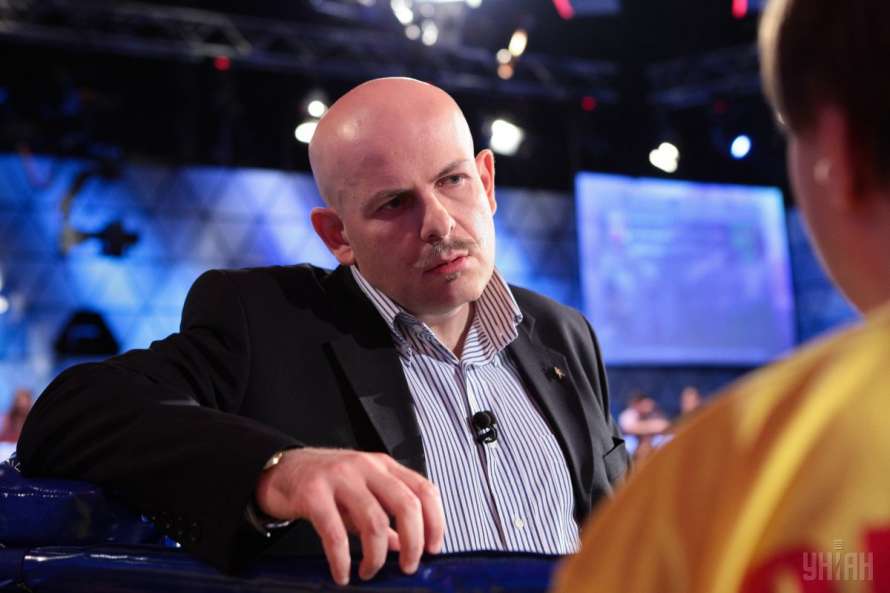
Ukrainian journalist Oles Buzina. Source: Lenta.ua.

Even though the original was written in 2009, it remains ever more relevant. Echoes of World War II permeate the ongoing conflict in Ukraine that began in 2014 as the war in Donbass. For example, Buzina disparages the 21st-century supporters of the Third Reich collaborators in 1940s Ukraine. These present-day supporters have been receiving international media attention since 2022. Parallels between then and now are also evident when it comes to Nazi Germany’s plans for Crimea as a resort exclusively for Germans and what some alleged to be NATO’s failed plans to turn Crimea into a naval base in 2014.

The article is written in Buzina’s signature style combining his caustic sense of humor with historical deep dives. This style is particularly evident in his description of the Munich Agreement (1938) highlighting it as a precedent that subsequently forced the Soviet Union into a neutrality agreement, the Molotov-Ribbentrop Pact (1939), with Nazi Germany. However, it is important to note that Buzina then refers to the Soviet Union and Nazi Germany as “allies”—for a short time. This classification is inaccurate because a non-aggression, or a neutrality, agreement, is not a military alliance. Furthermore, prior to Molotov-Ribbentrop came other similar agreements with Nazi Germany, including the German-Polish declaration of non-aggression in 1934. Thus, the Soviet-German neutrality agreement was not unique.

Note that when the author refers to the “war,” he means the Great Patriotic War, the accepted term for the period between 1941 and 1945 in World War II historically used by the USSR and today—by Russia and parts of the former Soviet Union. Buzina also repeatedly mentions the period of 1941-1944: these are the dates for Nazi German occupation of the Ukrainian territory called Reichskommissariat Ukraine prior to the Soviet liberation. “May 9” refers to the official Victory Day in Russia and the post-Soviet states.

Editorial clarifications are labeled “Ed.” in parentheses.

The translation appears as is. Minor edits include using a person’s first name in the first instance or other types of minor clarifications. The names and toponyms are transliterated from the Russian original.

Continue reading
Stepan Bandera—the Cat Strangler

Notes on context, editing, and translation:

The original article was entitled “Stories from Oles Buzina: Bandera—the Cat Strangler” written by a prominent Ukrainian journalist Oles Buzina and published on January 29, 2010. Buzina was a Ukrainian patriot who believed Russians, Ukrainians, and Belarussians were triune. He was critical of the gradual imposition of the minority Galician (western Ukrainian) identity onto the majority of Ukraine even before the 2014 Maidan. For example, in this article, the author criticizes Ukraine’s former President Viktor Yushchenko brought to power through the so-called Orange Revolution in 2004. Some consider the 2004 event to be a proto-regime change in that country that succeeded in 2014. In 2010, Yushchenko posthumously granted Nazi collaborator Stepan Bandera the Hero of Ukraine title. Bandera lived in Polish-controlled Galicia outside the Ukrainian Soviet Socialist Republic in the 1920s-1930s and then in Munich, Germany. The latter is an early negative-identity example along the same trajectory as the post-2014 attempts to “cancel” the Russian language and heritage and even remove monuments to the Soviet WWII military leaders.

«Any politician who tries to impose Bandera as Ukraine’s hero will not only destroy his personal career…but will also destroy the country.»

Oles Buzina, in “Unheroic ‘bandera’,” January 2011

In April 2015, Buzina was assassinated outside his Kiev home—allegedly for his vocal criticism of the Maidan. The murder was one of the first key signs of political radicalization in Ukraine. I have previously translated him here.

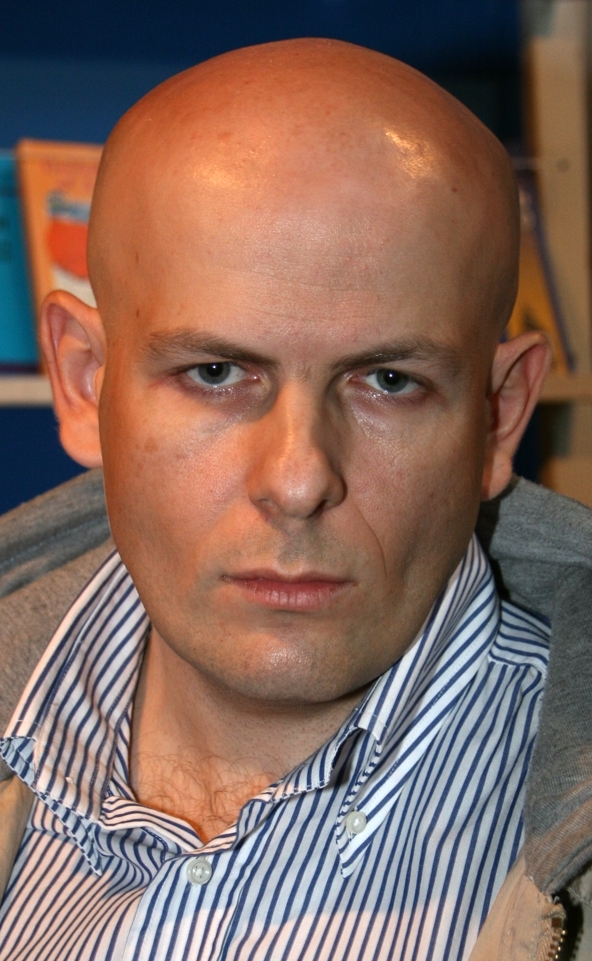
Oles Buzina in 2008. Source: Creative Commons Attribution-Share Alike 3.0 Unported.

The article is presented in its entirety. The only deviation from the original is using the first name the first time each new individual is mentioned. Square brackets are editorial clarifications.

Stepan Bandera—the Cat Strangler

by Oles Buzina

It’s too bad that [Ukraine’s President (2005-2010)] Viktor Yushchenko doesn’t know history very well. With his decree making Stepan Bandera a national hero [of Ukraine], he spat in the soul of animal rights advocates all around the world by awarding an animal abuser.

As a writer, what impresses me the most in the story of the newly minted “hero of Ukraine,” is the completeness of the gastronomical theme. On Bandera’s order in 1934, the Interior Minister of Poland, Bronisław Pieracki, was assassinated as he entered a cafe in Warsaw to grab a bite to eat. The mastermind and organizer of this “attentat” (what they call assassination attempts in Galicia [Ukraine]), the half-educated student Bandera was only 25 years old. He was halfway through his life path which he did not suspect.

Continue reading

Stories from Oles Buzina: SS Galicia Division against Ukraine

Foreword to the Translation

With the onset of the Ukrainian crisis, I realized that I often looked forward to the work of certain journalists, who were both eloquent and informative. Oles Buzina was one of them. In addition to reading his columns, I, like millions of other Russians, watched his frequent appearances on political talk shows. I often found myself in disagreement, but had to admit that his points were well-argued and factually justified—a true sign of a charismatic erudite.

Thus, the news of his brazen murder on April 16 of this year, in broad daylight and outside his home, was particularly distressing. Later, I found out that Oles—a well-known author and historian, in addition to his journalistic career—had been receiving threats for quite some time. Yet he consistently turned down offers to relocate to Russia. Like a true patriot of a country in peril, he continued to love Ukraine. But Ukraine—today’s Ukraine—did not return that sentiment.

Continue reading