Ronald Reagan’s Failed Attempt to Create a Homeland for the Palestinians

These days, the U.S. seems to offer unequivocal support to Israel and has been for decades. The U.S. officialdom perceives that country as a strong, reliable ally in the region. But behind the scenes, there were disagreements, at times, with Israel simply ignoring American advice regarding foreign policy while accepting its arms, intelligence, and funding. Furthermore, American public opinion appeared to be more divided in the past than it is today.

U.S. historians Stephen Ambrose and Douglas Brinkley write about this relationship during the Cold War:

«The difficulty was that the Israelis, although eager to accept American arms and willing to cooperate with the Americans on military intelligence, viewed Arab nationalism and the PLO [Palestinian Liberation Front], not the Russians, as the chief threat.»1

In other words, Israel would accept American support but pursue its own goals rather than those of the U.S. The relationship was complicated further by the status of the Palestinian Arabs. According to these historians:

«[I]n direct defiance of strongly stated American wishes, [Israeli Prime Minister Menachem] Begin continued to encourage Jewish settlement on the West Bank [in the early 1980s], turning it from a potential homeland for the Palestinians into a perhaps a permanent part of greater Israel.»2
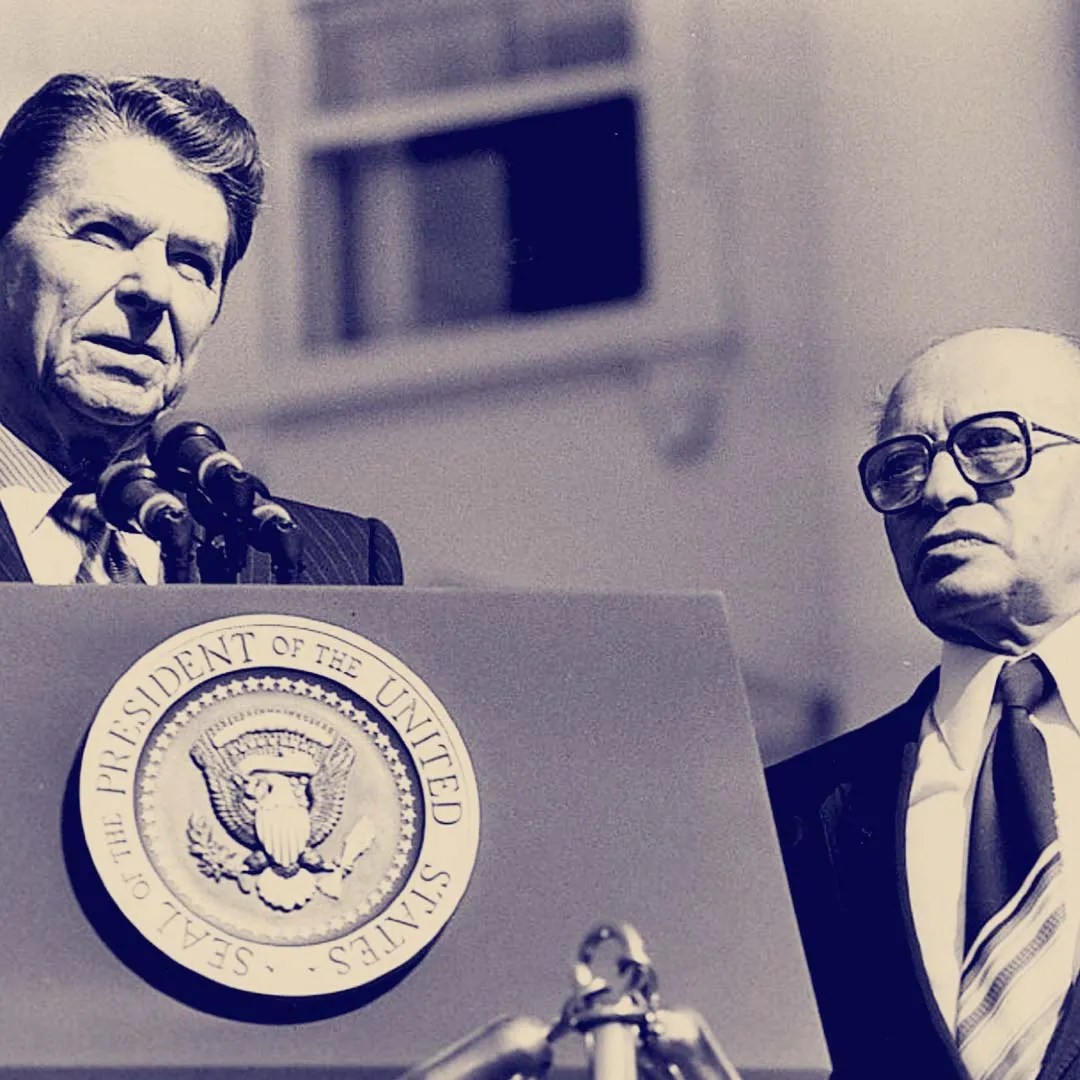
Ronald Reagan and Menachem Begin. Source: Haaretz.

One telling incident from this period comes to mind during the Ronald Reagan presidency.

Continue reading
JAPAN’S RASPUTIN: an Imperial Officer and Spy Who Claimed to Eat His Enemies’ Flesh

In my newest video, I discuss the insane story of Masanobu Tsuji, a colonel in the Japanese Imperial Army during World War II, an alleged war criminal, a postwar politician, and a spy for a number of countries.

I’ve never researched a subject in English, Russian, and Japanese (mine is at an intermediate level thus far), so that was a first for me.

One-Time
Monthly
Yearly

Supporting my work allows me to bring you content on a regular basis.

Make a monthly donation

Make a yearly donation

Choose an amount

¤5.00
¤10.00
¤50.00
¤5.00
¤15.00
¤100.00
¤5.00
¤15.00
¤100.00

Or enter a custom amount

¤

Your contribution is appreciated.

Your contribution is appreciated.

Your contribution is appreciated.

DonateDonate monthlyDonate yearly

One of the more worthwhile aspects of this story was learning something new for myself such as the fact that it was Tsuji who fought against the future Soviet Marshal Zhukov during the Soviet-Japanese border clashes.

Hope you like my investigation!

Vladimir Putin: The Future Russian Leader’s Path to the KGB

Weekend watching! 🍻 

As requested, here is my new video investigation about Vladimir Putin’s path to the KGB. It is full of interesting historical tidbits. And how could I leave out World War II?

Enjoy!

One-Time
Monthly
Yearly

Supporting my work allows me to bring you content on a regular basis.

Make a monthly donation

Make a yearly donation

Choose an amount

¤5.00
¤10.00
¤50.00
¤5.00
¤15.00
¤100.00
¤5.00
¤15.00
¤100.00

Or enter a custom amount

¤

Your contribution is appreciated.

Your contribution is appreciated.

Your contribution is appreciated.

DonateDonate monthlyDonate yearly

A Brief History of Russia-U.S. Nuclear Arms Control and Russia’s Suspension of the New START

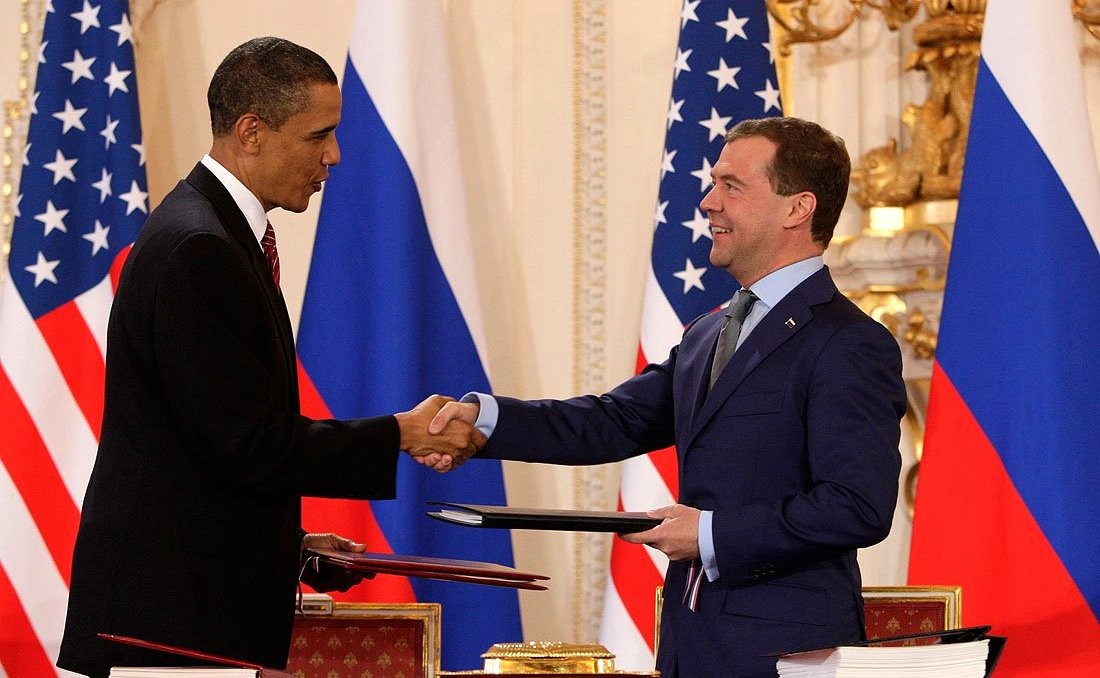
The new START treaty officially called the Measures for the Further Reduction and Limitation of Strategic Offensive Arms, was signed by Russian leader Dmitry Medvedev and American President Barack Obama in April 2010 in Prague. This nuclear arms reduction agreement entered into force, after being ratified, a year later. In fact, this agreement is the only remaining treaty between the U.S. and the Russian Federation on the subject of nuclear arsenal regulation. Yet, on February 21, 2022, President Vladimir Putin announced its suspension in an annual address to Russia’s Federal Assembly. According to Putin, this suspension is not a complete withdrawal. To resume its participation, Russia will have to account for NATO’s combined strike arsenal among other issues. What is the history and the implications of this move?

Barack Obama and Dmitry Medvedev signing the new START treaty, Prague, Czech Republic, April 2010. Source: Kremlin.RU, Creative Commons Attribution 3.0.

World War II

To understand the present, we must return to the past and the history of nuclear arms usage and control. The U.S. ran the secret Manhattan Project during World War II to develop nuclear weapons. President Harry Truman, who replaced Franklin D. Roosevelt upon his death in April 1945, was tasked with completing the war effort in the European and Asia-Pacific theaters. He learned about the first successful—and successfully destructive—atomic test in New Mexico at the last wartime Allied conference in Potsdam in July 1945. One of the key issues discussed at Potsdam was Japan’s unconditional surrender. Truman decided to inform Joseph Stalin about this new powerful weapon, but the Soviet leader seemed uninterested. Behind the scenes, however, Stalin was already aware of the American project through Soviet intelligence. Indeed, the Soviet nuclear-research counterpart began in 1942, and now Stalin, too, wanted to expedite his project. 

Continue reading