Russian-American Aviator Sikorsky and the Failure of Ukrainian and Western Propaganda

«We are Russians, and Kiev is ours.»

~Ivan Sikorsky, psychiatrist and Igor Sikorsky’s father

Since the 2022 escalation of the 2014- war in Ukraine, major Western media sources have been routinely churning out article after article sprinkled with glowing, thinly veiled propaganda about the supposedly heroic feats performed by Ukraine’s 18th Separate Army Aviation Brigade, named after aviator Igor Sikorsky. The Sikorsky Brigade for short. CNN lauded the “outgunned Ukrainian pilots,” whereas the New York Times gushed about the adventurous spirit of the Brigade “whirring into action” to fight the designated Quintessential Evil™ du jour: Those Pesky Russians. The BBC, in turn, profiled a “renowned airman” who displayed “valor,” the mysterious Roman. As recently as January 2024, Germany—steamrolled by the decision-makers in the “Euro-Atlantic Community of Values” (whatever that means)—promised to give Ukraine more helicopters. Sikorsky Sea King helicopters likely going to the Sikorsky Brigade. Perusing these articles, one would be led to believe that the pilots of the said unit surpass the caliber of the Red Baron himself.

Ukraine’s 18th Sikorsky Brigade. Source: Facebook.

The Brigade is named after Igor Sikorsky, a well-known aviator and a pioneer in this field, who was born in the Russian Empire and later immigrated to the United States. Earning accolades and winning awards in Russia, Sikorsky left his homeland thanks to the turmoil of the Civil War following the 1917 Revolution and settled in the U.S. There, he launched the Sikorsky Aircraft Corporation in 1923. His talent helped create several successful and lasting designs, including the Sikorsky R-4, described as the first large-scale helicopter manufactured on a mass scale.
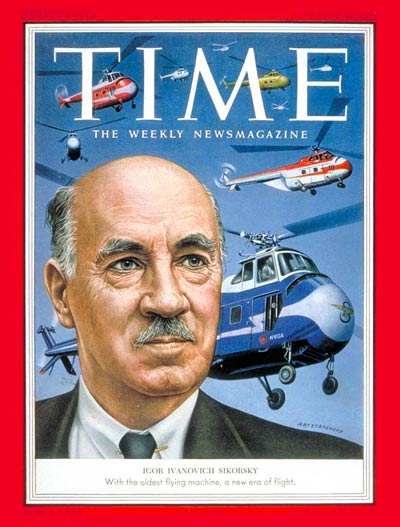
Aviator Igor Sikorsky on the cover of Time magazine, 1953.

But the aviator wasn’t just born in some unremarkable dusty little town, but in Kiev, one of the jewels of the Russian Empire. Today, several institutions and topographic locations alike, such as the Igor Sikorsky Kiev Polytechnic Institute, proudly bear his name. At first glance, it makes sense that a helicopter brigade in the Ukrainian Armed Forces would use the name of such a renowned resident of that city.  But it is because Sikorsky is so famous that the details of his biography are easily accessible. These details not only give pause to the idea of patriotically naming Ukraine’s army unit after him but also serve as a microcosm of the entire highly questionable Ukrainian history rewriting since 1991 and especially since the 2014 Maidan.

Continue reading
What If Nazi Germany Won in Ukraine


«Those who are now destroying the cemeteries of the Soviet soldiers will still pay for doing so. Nature will take revenge on them and their children although they may not believe this now. No one can cancel the law of historical karma. This law always catches up to the grave robbers.»

-Oles Buzina

Notes on Context, Editing, and Translation

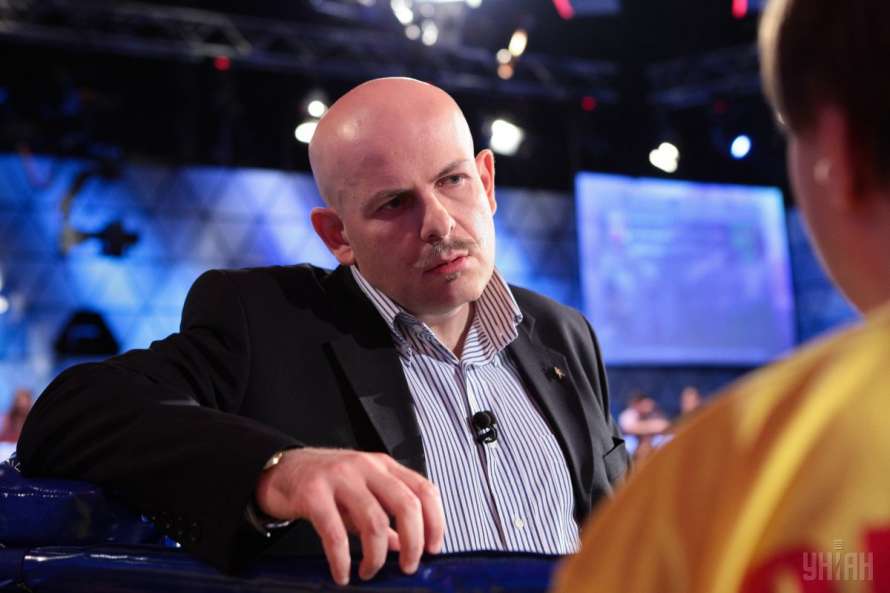
This article was originally called “Stories from Oles Buzina: Under the Greatcoat of Victory” from the popular Ukrainian author’s “Stories from Oles Buzina” series. It was published in May 2009. As mentioned with all the other Buzina translations, their author was assassinated in 2015 likely for his political views, including those against the 2014 regime change in Ukraine. You can find the other Buzina translations below by using the appropriate “Buzina” hashtag.

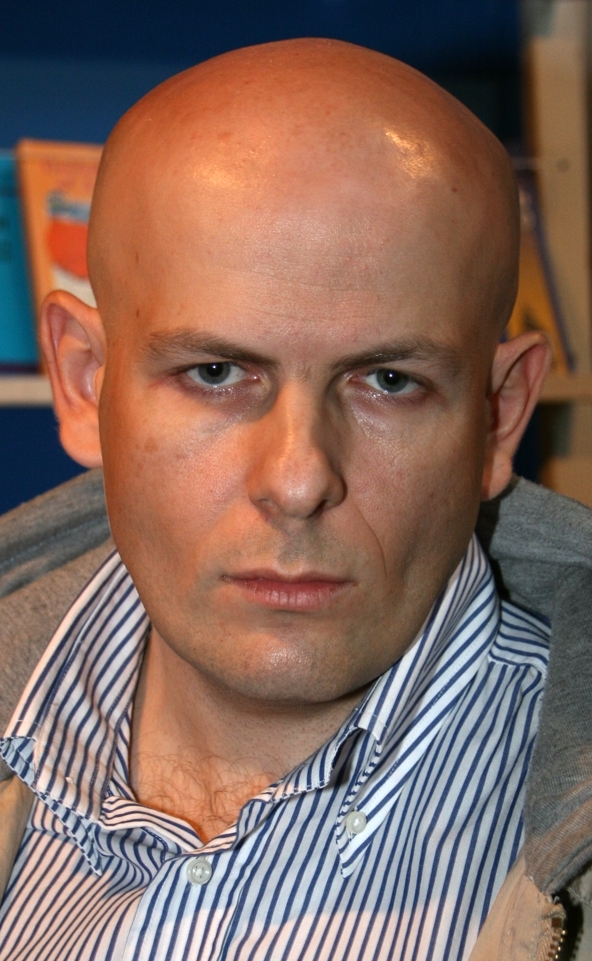
Ukrainian journalist Oles Buzina. Source: Lenta.ua.

Even though the original was written in 2009, it remains ever more relevant. Echoes of World War II permeate the ongoing conflict in Ukraine that began in 2014 as the war in Donbass. For example, Buzina disparages the 21st-century supporters of the Third Reich collaborators in 1940s Ukraine. These present-day supporters have been receiving international media attention since 2022. Parallels between then and now are also evident when it comes to Nazi Germany’s plans for Crimea as a resort exclusively for Germans and what some alleged to be NATO’s failed plans to turn Crimea into a naval base in 2014.

The article is written in Buzina’s signature style combining his caustic sense of humor with historical deep dives. This style is particularly evident in his description of the Munich Agreement (1938) highlighting it as a precedent that subsequently forced the Soviet Union into a neutrality agreement, the Molotov-Ribbentrop Pact (1939), with Nazi Germany. However, it is important to note that Buzina then refers to the Soviet Union and Nazi Germany as “allies”—for a short time. This classification is inaccurate because a non-aggression, or a neutrality, agreement, is not a military alliance. Furthermore, prior to Molotov-Ribbentrop came other similar agreements with Nazi Germany, including the German-Polish declaration of non-aggression in 1934. Thus, the Soviet-German neutrality agreement was not unique.

Note that when the author refers to the “war,” he means the Great Patriotic War, the accepted term for the period between 1941 and 1945 in World War II historically used by the USSR and today—by Russia and parts of the former Soviet Union. Buzina also repeatedly mentions the period of 1941-1944: these are the dates for Nazi German occupation of the Ukrainian territory called Reichskommissariat Ukraine prior to the Soviet liberation. “May 9” refers to the official Victory Day in Russia and the post-Soviet states.

Editorial clarifications are labeled “Ed.” in parentheses.

The translation appears as is. Minor edits include using a person’s first name in the first instance or other types of minor clarifications. The names and toponyms are transliterated from the Russian original.

Continue reading

Misinformation, Media, and the Social Mood in 20th-Century Civil War-Era Ukraine

«The newspapers—going mad from all the contradictory rumors—willingly printed all this nonsense…These rumors lost their direct purpose of reporting fictitious “facts”…They turned into a means of self-soothing or a powerful narcotic medicine. Only in rumors, people found hope for the future. Even outwardly, Kiev residents began to resemble morphine addicts.»

Editor’s and Translator’s Note

Thinking about the chaos that seems to periodically erupt in the territory of Ukraine, a Hegelian would argue that there are historical inevitabilities that explain such large-scale events. A student of geopolitics would add that the relationship between land and politics backed by the knowledge of history shapes our understanding of the world. On more than one occasion, we discussed the striking parallels between the turbulent events of the early 20th-century Russian Civil War in the territory of Ukraine and the present-day conflict in the region. Yet, the following excerpt from Konstantin Paustovsky’s autobiographical The Story of a Life (1962) goes even further to shed light on mis- and disinformation, mass media, as well as the social mood in Kiev immediately after the 1917 Revolution.

After all, Paustovsky, a Nobel Prize-nominated Soviet author, spent his youth between Moscow and Kiev. While in Kiev, he documented his perceptions of the frequent changes in the self-proclaimed governments, foreign “interventions,” and the way in which the public responded to them. In this sense, his writing is valuable because it provides an additional dimension to understanding war propaganda both a century ago and today.

The translation is generally presented as is. Exceptions include using the full names where they were omitted in the original and providing editorial notes for context. As always, translation is an art, not a science. For instance, in some cases, I translated the word “power” (vlast‘)—in reference to those who ruled during the Civil War—as a “regime” because the author did not use the term “government,” and this translation is more in line with the theme.

The Story of a Life (Excerpt)

Konstantin Paustovsky

1962

The regime of the Ukrainian Directorate and Symon Petliura looked provincial. The once-brilliant Kiev turned into an enlarged Shpola or Mirgorod with their formulaic presences and Dovgochkhuns (Ivan Dovgochkhun is a character in How the Two Ivans Quarrelled (1834) by Nikolai Gogol – Ed.) who presided in them.

Saint Sophia, pre-revolutionary Kiev, early 20th century.
Continue reading

From Ukraine to The Ruin

Editor’s and Translator’s Notes:

I continue to bring you my translations of the witty and brilliant slain Ukrainian author, Oles Buzina (1969-2015). His was one of the first prominent political assassinations after the 2014 regime change in that country. This article comes from the author’s series, “Stories from Oles Buzina,” in which he mainly covers different aspects of Ukrainian history. Here, the author establishes what, in his view, is a cyclical nature of Ukrainian history, in which the territory went through periods of chaos and collapse. In some cases, the geographic division occurred along the Dnieper River and the inhabitants of its Right and Left Banks, respectively.

“The Ruin” is an accepted historical term used to describe the period of social and political unrest in the latter part of the 17th century. In the Russian and Ukrainian languages, “ruina,” ruin, rhymes with “Ukraina,” Ukraine. The author warns against returning to such a chaotic state of affairs when he discusses the rule of the pro-Western President Victor Yushchenko who was brought into power in the wake of the so-called Orange Revolution, an early 21st-century proto-Maidan. Leaving power in 2010, he was replaced by Victor Yanukovich, an imperfect, but democratically elected leader who was ousted by the violent 2014 coup d’etat. Thus, the reader may appreciate Buzina’s prescience, writing this text in 2007, in light of the current events. In particular, the geopolitical and cultural split along the Dnieper River is especially noteworthy.

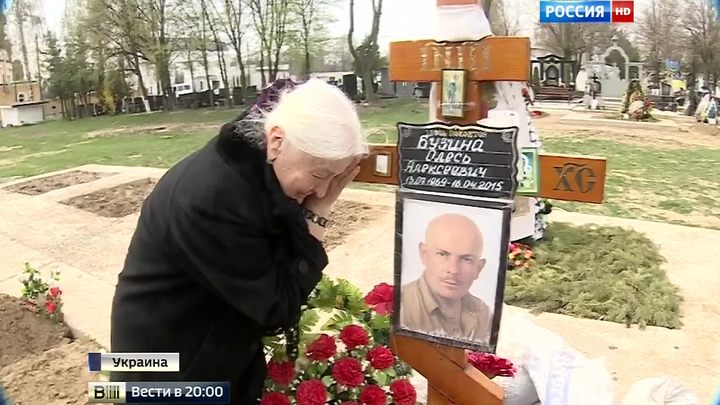
Oles Buzina’s mother at his grave following her son’s 2015 assassination. Source: Rossiia TV.

The text is generally presented as is with the exception of minor contextual and/or clarifying edits or e.g. inserting the first names for clarity. The transliteration of the names comes from the Russian language, in which most of the original text was written.

«The Eyewitness wrote his chronicle in the 17th century, so there is no reason not to believe him. Starting with the brutal massacre in Poltava, Cossacks of different affiliations killed each other for another twenty years asking for help from either the Poles, the Muscovites, or even the Turks. For and against Europe.»

Oles Buzina, 2007

From Ukraine to The Ruin

by Oles Buzina

2007

If God willing, our state will overcome the current ruin in the minds and does not fall apart into two halves, then next year we will be able to celebrate 350 years since its first “half-collapse” with a clear conscience.

In 1658, for the first time, our society was divided on the following question: where will we go? Ivan Vygovsky, like today’s Victor Yushchenko, summoned everyone to Europe. That is, under Poland’s jurisdiction. But the east of Ukraine did not listen to him. And, the said hetman, having grabbed a completely non-European Tatar horde, moved to punish the pro-Moscow Left Bank from the Right Bank of the Dnieper River: from Chigirin, his capital. He introduced, so to speak, direct presidential rule. And, as a result, he marked the beginning of a period that went down in history under the eloquent name The Ruin.

The Reply of the Zaporozhian Cossacks [to the Turkish Sultan in 1676], Ilya Repin, 1880-91.
Continue reading

A Russian Soldier’s Reassessment of Values. Memento Mori.

Editor’s Note:

This post went viral on Russian social media this week. Some people considered it authentic and complimented its author on his newly found wisdom. Others were more cynical and thought that it was fake or even written by an army recruiter. Perusing the author’s earlier posts about army life makes it seem that the text may indeed be real, but I cannot verify it. Ultimately, it’s up to you to decide. 

Re: Reassessment of Values

Memory Unlocked

Last year, when I returned from the Special Military Operation (SMO), I realized that I experienced a reassessment of values. This already happened to me in the past, but only in a basic way, namely when I served in the army on a standard 12-month draft. After that, I began to appreciate basic home life, comfort, and all that. Those who served will understand what I mean.

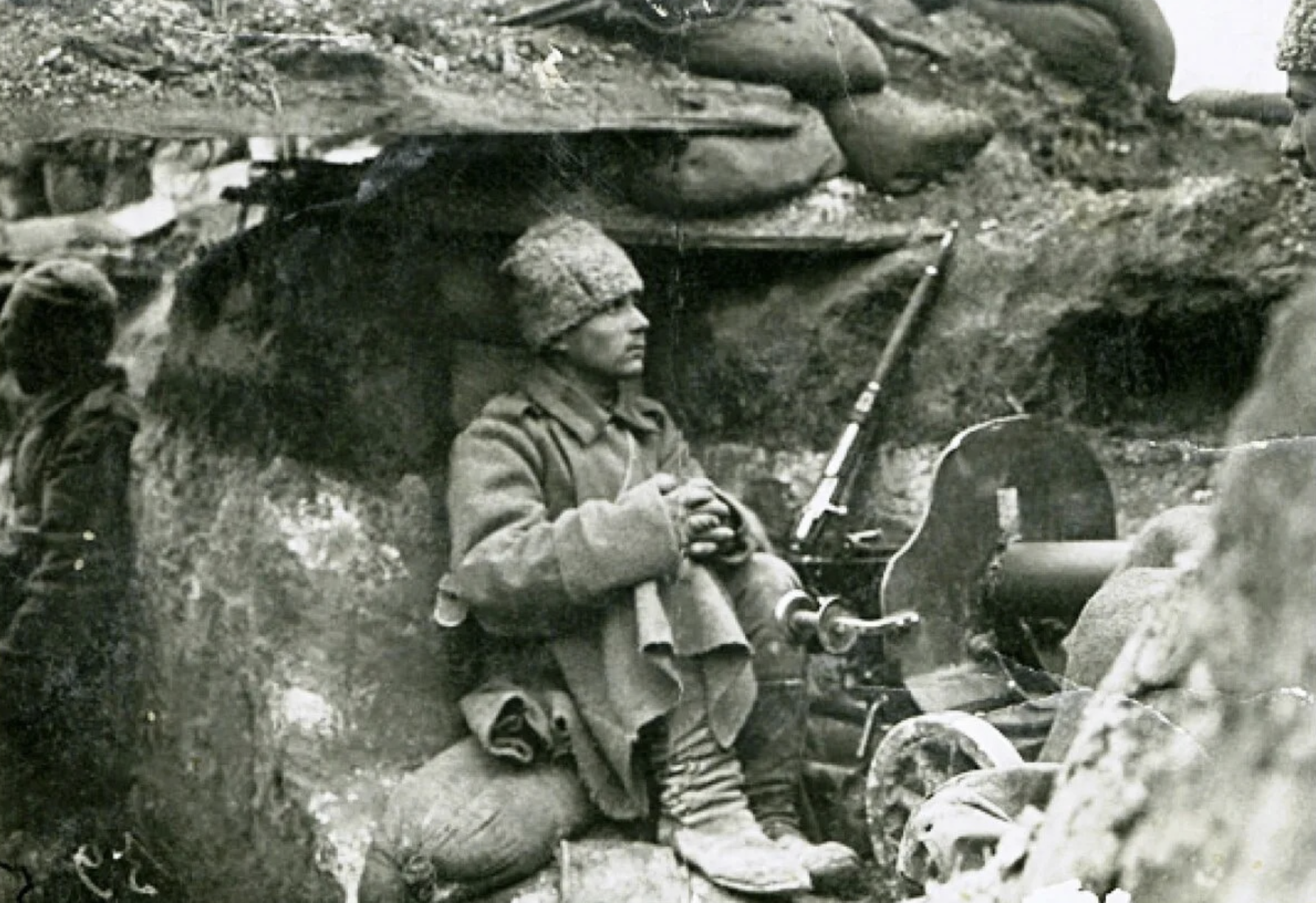
Russian soldier, World War I.

So, having come back from there [the SMO] last year, I started to appreciate life. Of course, I appreciated it before, but I began to savor it or something. Here is the sun, silence, and no danger. I became much calmer. Stopped rushing anywhere. My driving got calmer and more polite. Because I like the fact that I am living, the fact that driving is not a routine, but it is life itself. That even such a basic process lets you enjoy life, or rather, the fact that you are alive and that you can do this. 

Continue reading

The War on Orthodox Christianity in Ukraine

«We will not cast pearls before you, Muscovite swine. You are a powerless biomass. We will not only take this church from you, but we will also take everything. We will kick you out from our land and from the Kiev-Pechersk Lavra.»

-Greek Catholic priest Nikolai Medinsky, Kolomyia, Ivano-Frankovsk oblast, Ukraine, October 27, 2017. He made this statement following the capture and an attempt to expel the Orthodox from the Annunciation church built more than 100 years prior to the establishment of the Greek Catholic Church in Galicia.

In 2023, the Kiev-Pechersk Lavra, an important historic site for Orthodox Christianity, is under siege by the Ukrainian government. Its Metropolitan Pavel has been charged with “inciting religious hatred” and placed under house arrest. Yet the state’s persecution of the canonical Orthodox Church is the culmination of the brewing clash involving politics and identity since the establishment of independent Ukraine following the collapse of the Soviet Union. Its causes are far more complex and go back centuries when the Ukrainian territory was part of multiple states (Russia, the Polish-Lithuanian Commonwealth, the Austro-Hungarian Empire, and the Ottoman Empire).

Kiev-Pechersk Lavra, by Vasily Vereshchagin, 1905.

Indeed, when the new Ukrainian state emerged in 1991, it was based on two conflicting identities of the western minority and the eastern and southern majority, respectively. These identities were part of different geopolitical entities for centuries, in which culture, language, and religion played a key role. This is not to say that new states cannot be successfully formed, or that different identities within them cannot coexist. But the latter requires state mechanisms to facilitate such coexistence such as federalization and recognizing more than one state language.

Continue reading

Stepan Bandera—the Cat Strangler

Notes on context, editing, and translation:

The original article was entitled “Stories from Oles Buzina: Bandera—the Cat Strangler” written by a prominent Ukrainian journalist Oles Buzina and published on January 29, 2010. Buzina was a Ukrainian patriot who believed Russians, Ukrainians, and Belarussians were triune. He was critical of the gradual imposition of the minority Galician (western Ukrainian) identity onto the majority of Ukraine even before the 2014 Maidan. For example, in this article, the author criticizes Ukraine’s former President Viktor Yushchenko brought to power through the so-called Orange Revolution in 2004. Some consider the 2004 event to be a proto-regime change in that country that succeeded in 2014. In 2010, Yushchenko posthumously granted Nazi collaborator Stepan Bandera the Hero of Ukraine title. Bandera lived in Polish-controlled Galicia outside the Ukrainian Soviet Socialist Republic in the 1920s-1930s and then in Munich, Germany. The latter is an early negative-identity example along the same trajectory as the post-2014 attempts to “cancel” the Russian language and heritage and even remove monuments to the Soviet WWII military leaders.

«Any politician who tries to impose Bandera as Ukraine’s hero will not only destroy his personal career…but will also destroy the country.»

Oles Buzina, in “Unheroic ‘bandera’,” January 2011

In April 2015, Buzina was assassinated outside his Kiev home—allegedly for his vocal criticism of the Maidan. The murder was one of the first key signs of political radicalization in Ukraine. I have previously translated him here.

Oles Buzina in 2008. Source: Creative Commons Attribution-Share Alike 3.0 Unported.

The article is presented in its entirety. The only deviation from the original is using the first name the first time each new individual is mentioned. Square brackets are editorial clarifications.

Stepan Bandera—the Cat Strangler

by Oles Buzina

It’s too bad that [Ukraine’s President (2005-2010)] Viktor Yushchenko doesn’t know history very well. With his decree making Stepan Bandera a national hero [of Ukraine], he spat in the soul of animal rights advocates all around the world by awarding an animal abuser.

As a writer, what impresses me the most in the story of the newly minted “hero of Ukraine,” is the completeness of the gastronomical theme. On Bandera’s order in 1934, the Interior Minister of Poland, Bronisław Pieracki, was assassinated as he entered a cafe in Warsaw to grab a bite to eat. The mastermind and organizer of this “attentat” (what they call assassination attempts in Galicia [Ukraine]), the half-educated student Bandera was only 25 years old. He was halfway through his life path which he did not suspect.

Continue reading

A Brief History of Russia-U.S. Nuclear Arms Control and Russia’s Suspension of the New START

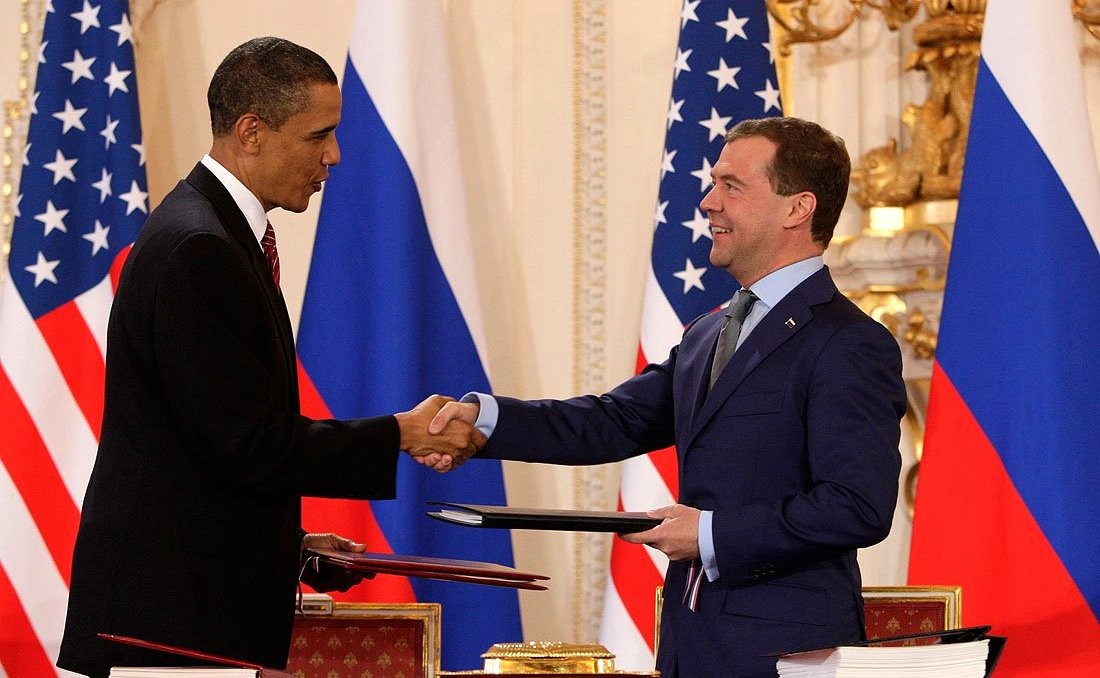
The new START treaty officially called the Measures for the Further Reduction and Limitation of Strategic Offensive Arms, was signed by Russian leader Dmitry Medvedev and American President Barack Obama in April 2010 in Prague. This nuclear arms reduction agreement entered into force, after being ratified, a year later. In fact, this agreement is the only remaining treaty between the U.S. and the Russian Federation on the subject of nuclear arsenal regulation. Yet, on February 21, 2022, President Vladimir Putin announced its suspension in an annual address to Russia’s Federal Assembly. According to Putin, this suspension is not a complete withdrawal. To resume its participation, Russia will have to account for NATO’s combined strike arsenal among other issues. What is the history and the implications of this move?

Barack Obama and Dmitry Medvedev signing the new START treaty, Prague, Czech Republic, April 2010. Source: Kremlin.RU, Creative Commons Attribution 3.0.

World War II

To understand the present, we must return to the past and the history of nuclear arms usage and control. The U.S. ran the secret Manhattan Project during World War II to develop nuclear weapons. President Harry Truman, who replaced Franklin D. Roosevelt upon his death in April 1945, was tasked with completing the war effort in the European and Asia-Pacific theaters. He learned about the first successful—and successfully destructive—atomic test in New Mexico at the last wartime Allied conference in Potsdam in July 1945. One of the key issues discussed at Potsdam was Japan’s unconditional surrender. Truman decided to inform Joseph Stalin about this new powerful weapon, but the Soviet leader seemed uninterested. Behind the scenes, however, Stalin was already aware of the American project through Soviet intelligence. Indeed, the Soviet nuclear-research counterpart began in 1942, and now Stalin, too, wanted to expedite his project. 

Continue reading